Inside Watertec’s Digital Leap: What Every Founder Building for Legacy India Must Learn
Dec 12
•
6
min read
GTM Leaders Stories
Pooja Baranigutta
A Consumer Psychologist, passionate about understanding what drives people to choose, trust, and love brands.
If you’ve tried selling to traditional enterprises, you’ve probably heard this more times than you can count: “Legacy companies move too slow, and they’ll never really adopt new tech.”
But what if that’s not the full story anymore?
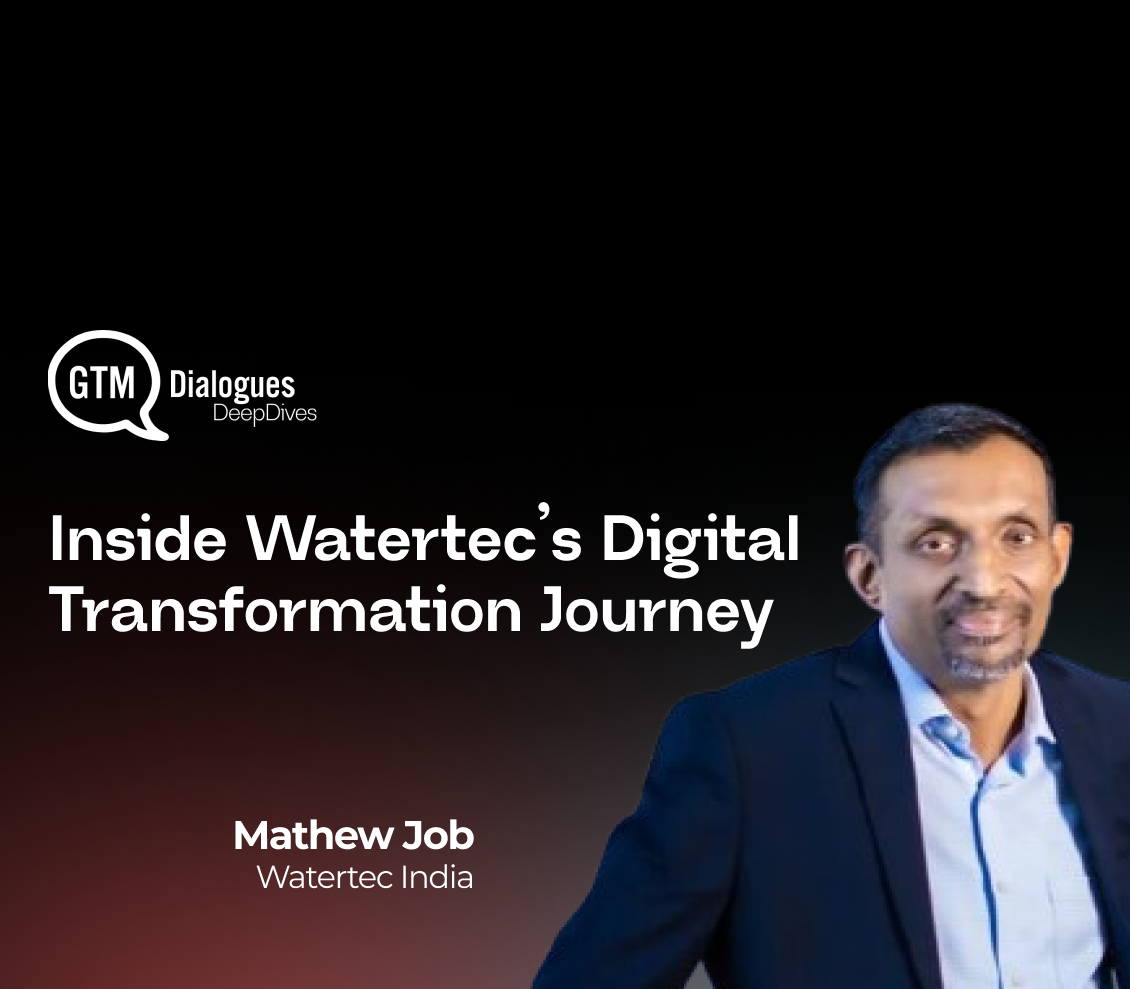
On October 31st, during our GTMDialogues webinar, we sat down with Mathew Job, Executive Chairman at Watertec, to uncover how a 28-year-old brand started rebuilding itself for a far bigger, faster future.
And Mathew wasn’t speaking as a consultant; instead, he was speaking as someone who had to fix the system from the inside.
That set the tone for the session, about what really pushes a legacy business to say yes to technology, what stops it for years, and how founders like you can align with the buyer’s mindset instead of fighting it.
In this blog, you’ll find Watertec’s transformation story, the moments that triggered it, and the realities you must understand if you’re selling to enterprise buyers today.
What the Inside of a Traditional Enterprise Actually Looks Like Before Transformation.
From the outside, traditional enterprises may look under-digitised. But once Mathew stepped into Watertec, he realised the systems simply reflected how the company had grown for 28 years.
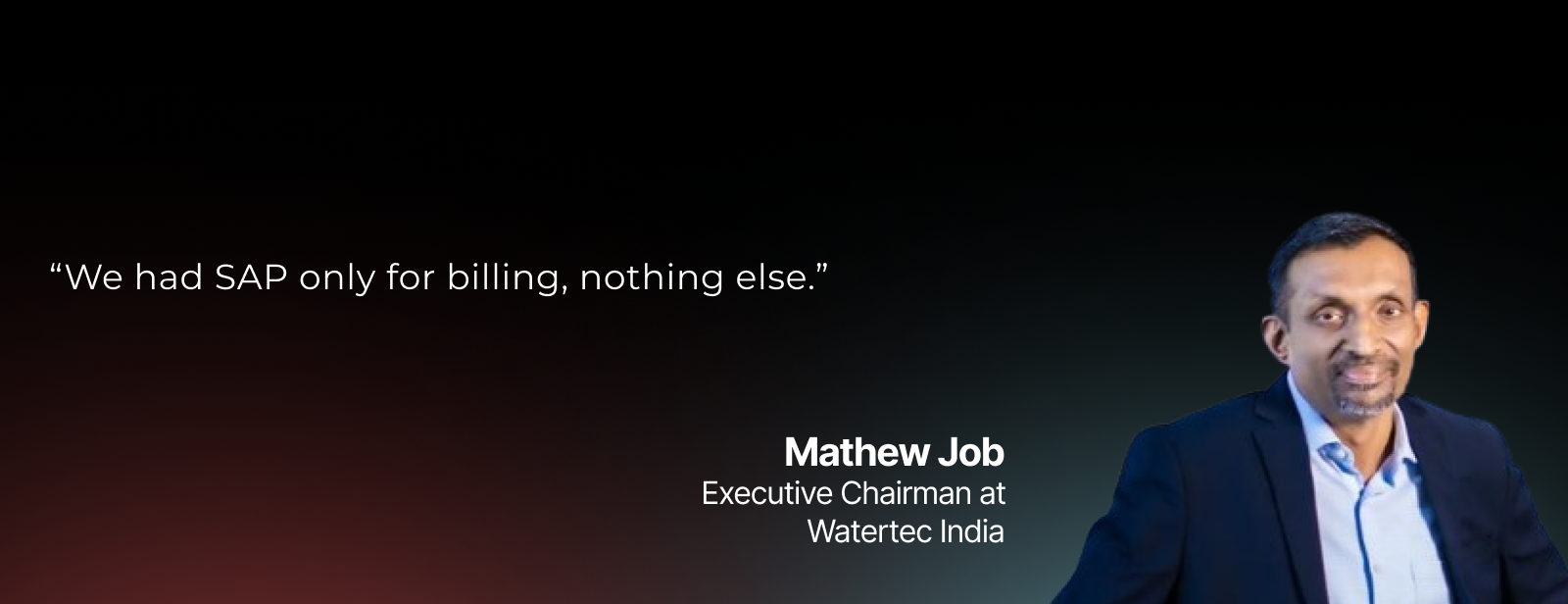
He found that Watertec was running on a single digital tool. As he put it,
Not because the organisation avoided tech, but because the older way still delivered results.
Most legacy businesses operate exactly like this. They build strong distribution, deep regional presence, and reliable operations long before they think about dashboards or automation.
For Example: Watertec managed manufacturing, distributors, retailers, and plumbers without any connected system. Each layer worked independently, stitched together through relationships rather than technology.
Mathew noticed something founders often miss: Traditional enterprises don’t delay tech because they’re slow, they delay it because nothing has demanded a different approach yet.
He said,
When a system works “well enough,” there is rarely urgency to change it.
This is the starting point. You must understand that Legacy enterprises don’t adopt tech because it’s available; they adopt tech only when the current way can no longer support where the company wants to go next.
What Changes Inside a Traditional Enterprise When Growth Becomes a Priority?
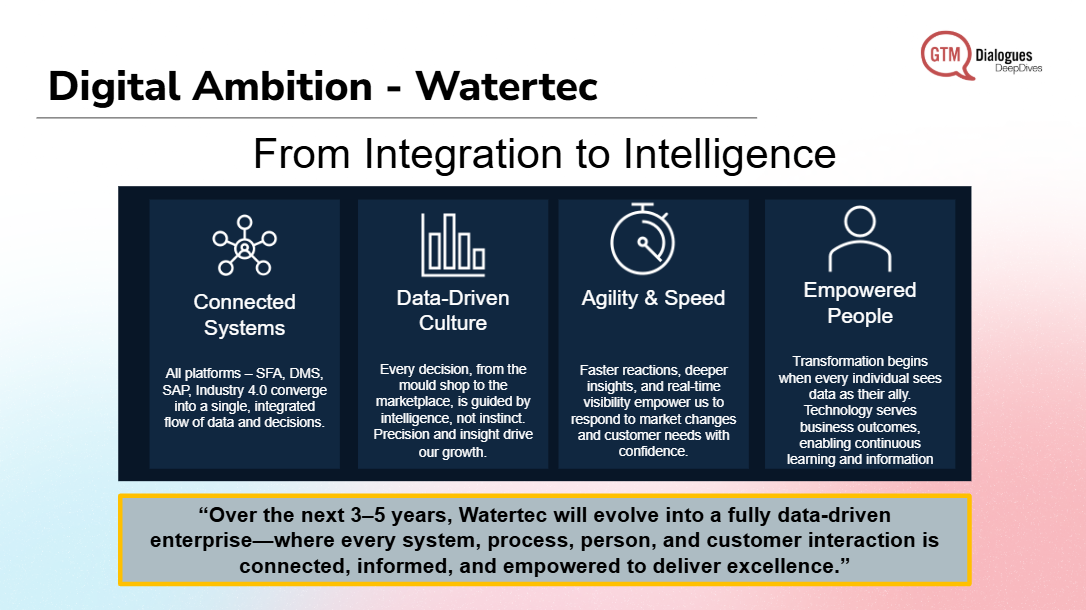
The turning point for Watertec didn’t come from technology; it came from ambition.
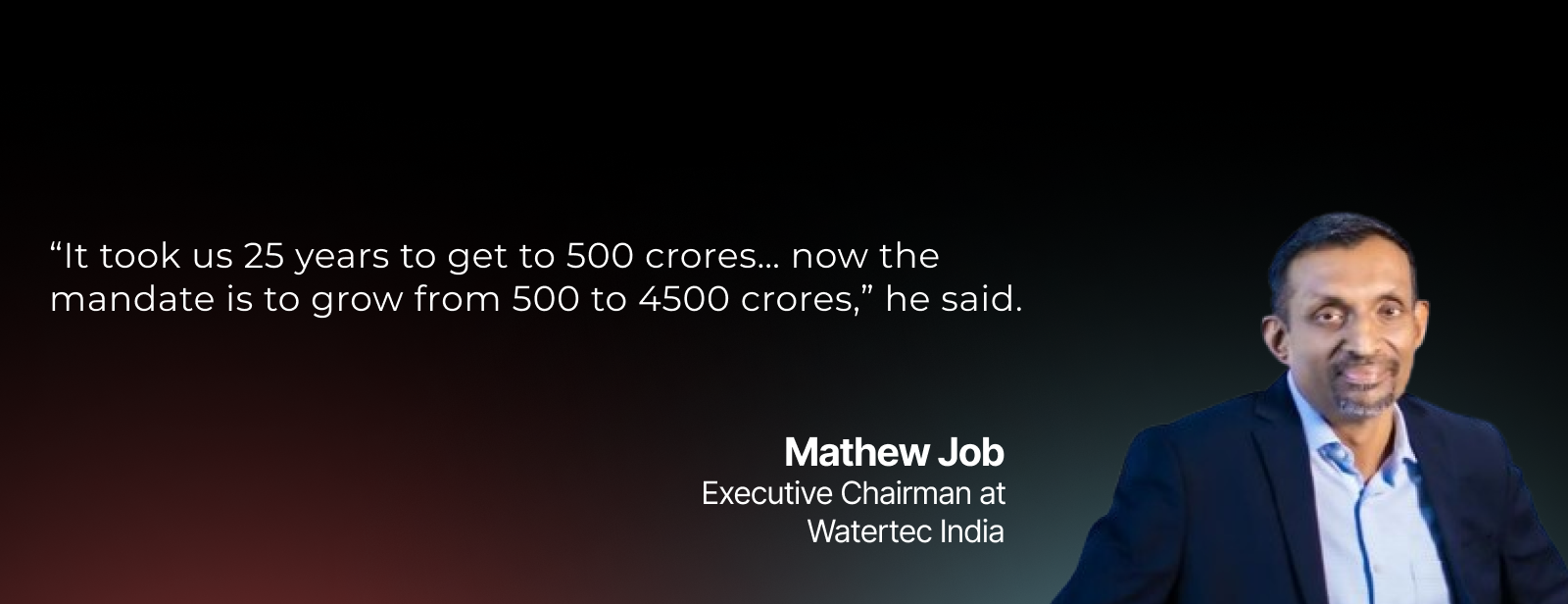
When new investors stepped in, Mathew was handed a target that instantly changed the company’s trajectory.
Growth of that magnitude forces a traditional enterprise to confront its gaps and processes that once felt manageable suddenly become bottlenecks. Manual work that once felt harmless starts creating delays.
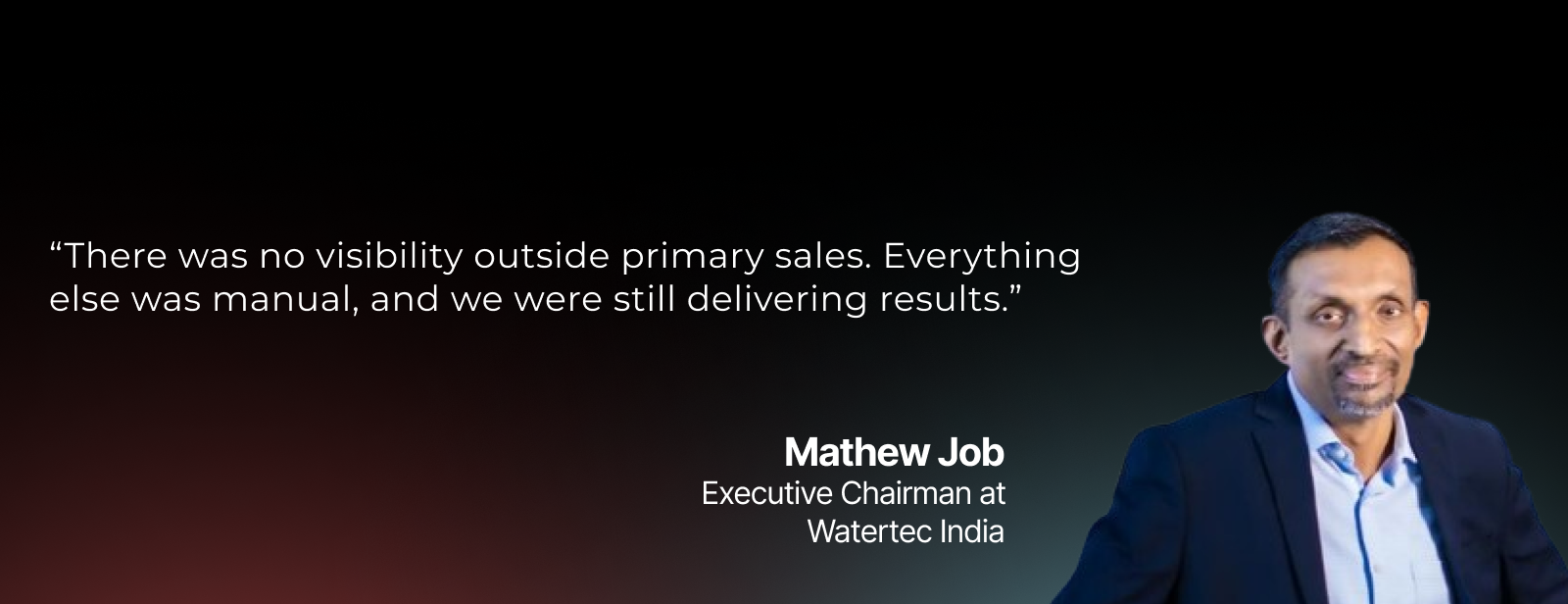
Without visibility across distributors, without predictable demand planning, and without data from the market, scaling would be guesswork. And guesswork doesn’t get a company from 500 to 4500 crores.
For instance, the sales team only had visibility of primary sales but everything beyond that such as distributor stock, retailer flow, plumber influence was invisible. Scaling distribution without visibility would only multiply blind spots.
That’s when the mindset inside a legacy enterprise changes.
Mathew summarised it clearly during the webinar:
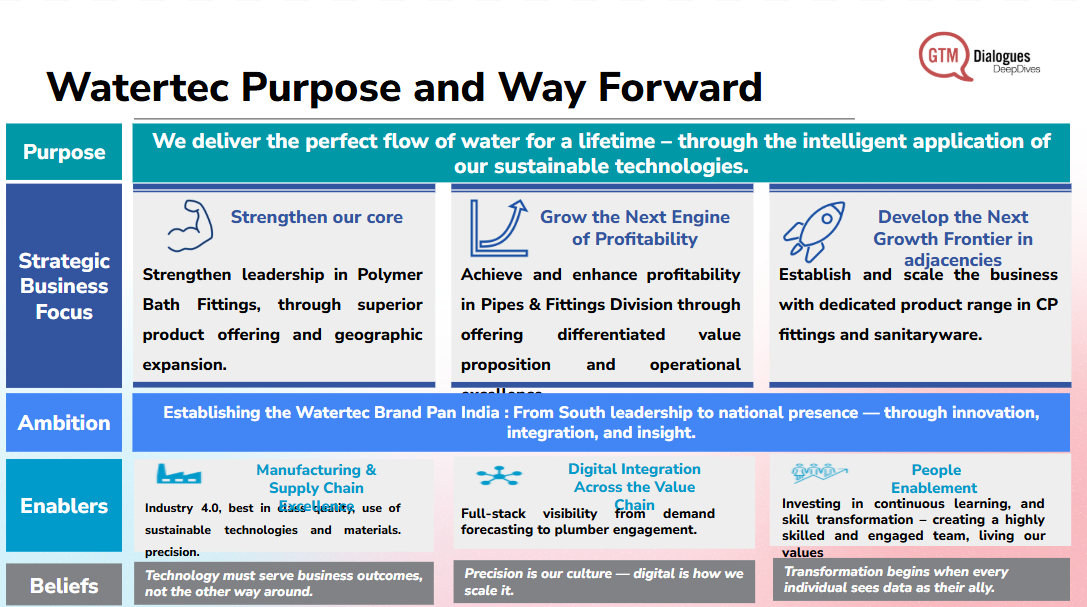
Once that purpose was reset, technology finally had a place to land. And every decision that followed, right from sales automation to DMS to forecasting all came directly from the pressure of the new growth ambition.
How Watertec Actually Began Its Digital Transformation
Once the new ambition was set, Watertec didn’t jump into technology. It started by fixing the parts of the business that would collapse first if the company scaled too fast. And every move was driven by one simple question: “What stops us from growing today?”
Mathew broke the transformation into practical layers instead of one big overhaul. Here’s how the story unfolded.
1. Building visibility where there was none
Before anything else, Watertec needed to see what was happening beyond primary sales so they;
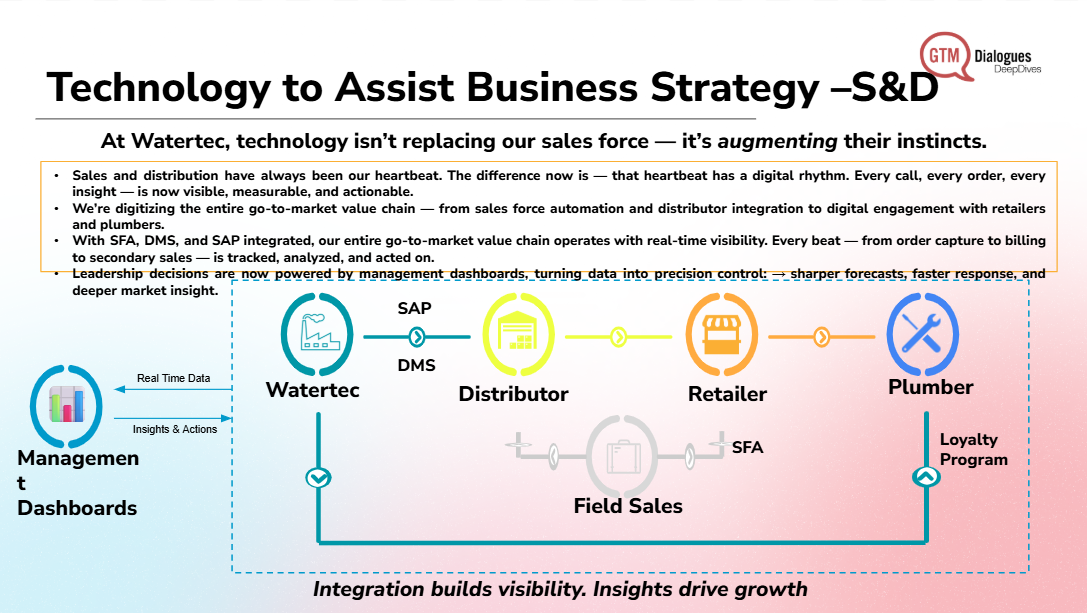
Introduced Distributor Management Systems (DMS) for sell-out tracking
Moved from zero visibility to measurable insights across distributors
Created a single view of stock and movement across regions
It mattered because you can’t grow a distribution-led business if you don’t know what’s selling.
2. Bringing the sales team onto a common system
The sales team was active, but not connected. Mathew had 350+ reps on the field without a unified way to track their work.
Deployed a sales automation platform
Geo-tagged 30–40k outlets
Shifted focus from primary sales to secondary movement
And with this Watertec finally knew what was happening in the market, not just monthly, but daily.
3. Reaching the real influencers: plumbers
This is where traditional enterprises often miss the mark. Plumbers pushed the category forward, but Watertec had no structured way to reach them. The team needed a simple channel but not an app that no one would open. So they;
Built direct communication loops on WhatsApp
Created plumber reward and training touchpoints
Used content to influence product preference
Example: Instead of tracking through paperwork, plumbers started receiving product updates and service reminders directly.
4. Fixing supply chain predictability
Forecasting was one of the biggest gaps. Mathew described it as decisions being made through “requests without demand logic.”
He introduced collaborative forecasting across teams
Built monthly demand sign-off rhythms
Moved from gut-based decisions to structured planning
Why it mattered was because thescale fails without predictability.
5. Formalising people, processes, and culture
Watertec couldn’t grow if its people didn’t grow with it. Tech adoption usually breaks at the human layer, not the software layer.
They rolled out HRMS and performance systems
Standardised training and onboarding
Created clarity on roles and expectations
People finally had a system that supported the new ambition instead of resisting it.
This was a sequence of practical decisions that made the company ready for the scale it wanted, not the scale it had.
What Traditional Enterprises Expect From Tech: The Buyer’s POV You Rarely See
If you’re a founder selling to traditional enterprises, you might think the biggest hurdle is convincing them to “go digital.” But listening to Mathew, you realise that the real challenge is understanding how they make decisions, because it’s nothing like how a startup evaluates tech.
This is where most founders lose the deal before it even begins.
1. They buy outcomes that make tomorrow safer, not tools that make today shiny
Watertec digitized sales because the company couldn’t scale without knowing what was selling beyond primary sales. Growth forced them to fix blind spots before those blind spots became expensive.
This is the lens your buyer uses:
Will this reduce uncertainty in my business?
Will my team’s life get easier, not harder?
Will this help me avoid mistakes that cost money and reputation?
Traditional enterprises move when the risk of not changing becomes bigger than the risk of changing.
2. They choose tools their people won’t be scared to use
Mathew had 350+ sales reps across India. Many of them were comfortable with notebooks, WhatsApp, and routine calls. Dropping a complex tool on them wouldn’t improve productivity, might instead freeze it.
Here’s the human truth:
Field teams fear “systems” more than problems
Simplicity reduces resistance
Familiar interfaces build confidence
If your tool doesn’t feel usable on day one, you’re adding anxiety to their work — not value.
3. The CEO carries the emotional load of the transformation
Mathew’s involvement was absolutely necessary. A transformation touches every corner of the organisation, and only the CEO can calm the fear, push decisions, and hold everyone steady.
What this means for you:
A mid-level champion can like your product
But the CEO must believe in what it will change
And must trust that you’ll stay when things get messy
Selling to a traditional enterprise is less about features and more about earning belief at the top.
4. Adoption is emotional, not technical
Mathew said it plainly:
Inside a legacy business, every new tool feels like a test
Will it expose mistakes?
Will it make someone irrelevant?
Will it complicate a routine they’ve mastered for years?
Your job is to reduce that fear:
Give clarity
Show respect for how they’ve worked so far
Offer hand-holding instead of “self-serve” links
You’re not just introducing software, you’re trying to introduce a new way of working.
5. They expect you to understand their world before offering solutions
Mathew valued partners who understood distribution, retailer movement, plumber influence, and the daily grind of a fragmented market. When a vendor didn’t understand these realities, they lost credibility instantly.
Your buyer is thinking:
“Do you get how my business actually runs?”
“Do you see my constraints before selling me a fix?”
“Can you understand my ground reality better than a deck?”
When you show that you understand their world, you stop being a vendor and start becoming someone they can trust with their future.
Traditional enterprises aren’t tough customers, they’re cautious because they’ve built what they have brick by brick, with systems held together by people, not dashboards. And once you respect that, your entire pitch changes and so does the way they respond to you.
The Hidden Operational Gaps Inside Watertec That Tech Hasn’t Fully Caught Up With
Even after all the progress Watertec made, Mathew was honest about one thing: transformation is never “done.” There are still gaps where traditional enterprises struggle daily, gaps founders like you can solve if you understand the ground reality.
Real-time, clean, connected data is still missing
Even with DMS, SFA, and forecasting systems in place, Watertec still doesn’t get a single view of the business without manual work. Teams still stitch data across tools to understand what’s actually happening.
This is your opening:
Tools that clean and merge data from legacy systems
Even after digitisation, most enterprise data sits in scattered, outdated systems. If you can unify this into one clean stream without asking teams to change their workflow, you solve one of their biggest hidden frustrations.
Lightweight layers that sit on top of existing tools:
Traditional companies don’t want to replace what already works, they want something that makes those systems smarter. A thin, flexible layer that integrates with their existing stack reduces friction and speeds up buy-in. It must feel more like an upgrade, and less like a disruption.
Real-time visibility without adding workload:
Most teams inside legacy businesses still stitch data manually to understand what’s happening. If you can give leaders instant visibility without asking field teams to do extra work, you create immediate trust.
Traditional enterprises don’t need more software, give them clarity without complexity.
Sales teams still operate reactively, not intelligently
Mathew spoke about how field reps collect data but still lack guided actions. A rep knows a retailer’s past orders, but not what to pitch next or which SKUs have a higher chance of movement.
Where you can build:
Simple recommendation engines:
Most field reps don’t have time to analyse past orders or spot patterns across retailers. A small recommendation layer that suggests what to sell, whom to meet, or which SKU to push can change their entire day.
“Next best action” nudges:
Sales teams often know what happened, but not what to do next. A contextual nudge like which outlet is slipping, which retailer needs follow-up, or which SKU is trending gives them direction at the moment they need it. It’s like having a quiet assistant who keeps them on track.
SKU-level suggestions based on past movement:
Retailers don’t move all SKUs the same way, and reps rarely have visibility into those patterns. SKU-level intelligence helps them pitch smarter by showing which products have higher chances of movement in that specific shop. It’s a small insight with a big impact on conversions.
These teams need a clear daily direction.
Distributors still run on a mix of habit and guesswork
No matter how structured the company becomes, distribution partners often continue old patterns. Demand signals get missed, inventory is stored unevenly and opportunities slip through the cracks.
Solutions that matter:
Tools that bring forecasting to distributors:
Most distributors still depend on gut feeling to plan inventory. A lightweight forecasting tool can show them what will move, when, and in what quantity without overwhelming them. It turns guesswork into predictable planning, which traditional enterprises desperately need.
Simple replenishment alerts:
Distributors rarely reorder at the right time because their attention is split across hundreds of SKUs. A simple, automatic alert when stock dips below a threshold can prevent outages and lost sales. It’s a small feature with massive downstream impact.
Automated stock balancing suggestions:
Inventory often piles up in one location while running dry in another, purely because no one notices until it’s too late. A system that flags imbalances and recommends quick redistributions saves time, money, and customer goodwill.
If you help a traditional enterprise fix its distribution layer, you win the whole account.
Plumber engagement still lacks consistency
Mathew acknowledged that plumbers drive the category. But even with WhatsApp programs and loyalty initiatives, sustained engagement is hard. Most plumbers don’t want apps, they want communication that fits their routine.
You can solve for:
WhatsApp-first micro-journeys:
WhatsApp-first workflows let them register complaints, earn loyalty points, or learn about new products without changing behaviour. It meets them where they already are, not where software expects them to be.
Voice-led training or support:
A large part of the plumber ecosystem is more comfortable speaking than typing. Short voice guides, IVR flows, or tap-to-listen instructions make learning feel effortless. Voice removes friction and gives them a support system that feels human, not technical.
Offline-friendly engagement workflows:
Connectivity isn’t guaranteed at job sites or local markets. Workflows that work offline and sync later help plumbers stay engaged without depending on network strength. This makes tech feel reliable even in the toughest environments.
Tech wins here only if it respects ground behaviour.
People still need support adapting to new ways of working
This was the subtext of the entire webinar. Tools are adopted not when they are powerful, but when they feel comfortable.
Opportunities:
Training systems built for non-digital-native teams:
Most enterprise teams aren’t used to software-heavy workflows. They learn best through simple, familiar formats, voice notes, micro-videos, and regional language guides. This opens space for training tools that feel like everyday communication, not “corporate learning.”
Nudges that help users build new habits:
Adoption fails not because people resist tech, but because old habits are deeply wired. Light, well-timed nudges, reminders, prompts, small wins will help users shift behaviour without feeling pressured.
Role-based workflows that feel intuitive:
A salesperson, distributor, and plumber don’t think alike, but most tools treat them the same. Workflows tailored to each role’s reality make the system feel natural instead of forced. When the interface matches the user’s world, adoption follows automatically.
You’re not selling tech, you’re trying to sell ease.
Traditional enterprises don’t need futuristic transformation. They need practical, respectful solutions that help their people work better tomorrow than they did today.
If you build for these gaps, you won’t just land a customer, you’ll become a partner in their most important chapter.
Key Takeaways for Founders Selling to Traditional Enterprises
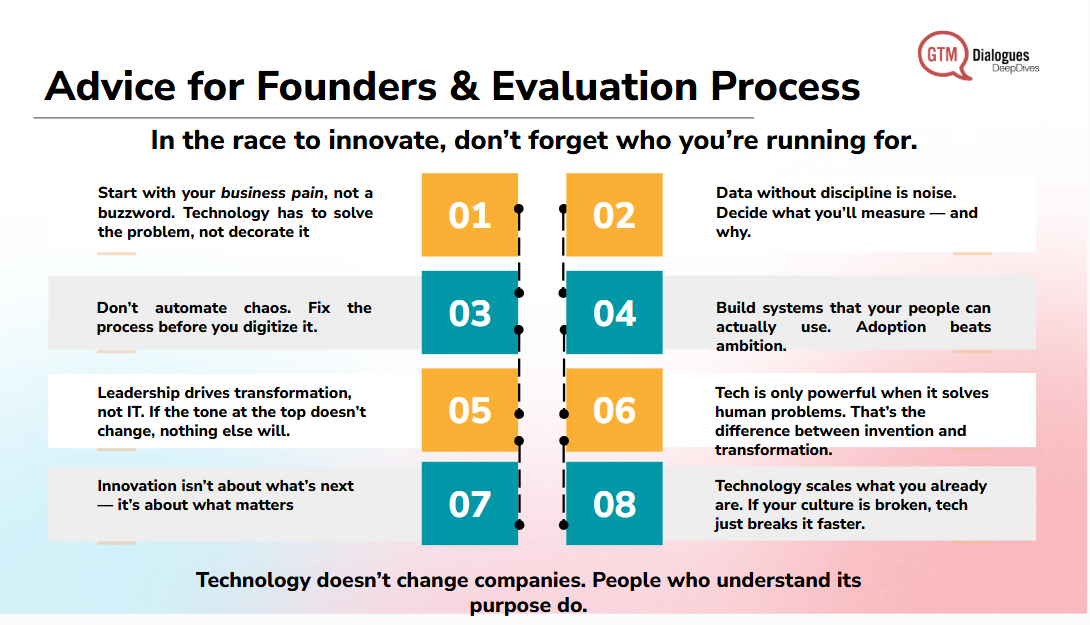
After hearing Mathew unpack Watertec’s journey, one thing becomes clear: Winning in traditional enterprises isn’t about selling faster, it’s about understanding deeper.
Here are the lessons you carry forward if you’re building for this world:
1. Lead with the business problem, not your product features
Enterprises move when the pain becomes undeniable. Help them see what breaks if they stay the same, not what’s shiny about your tool.
2. Make your solution simple enough for the least digital user
The field rep who’s never used an SFA is your true user. If they feel confident, adoption flies. If they hesitate, everything stalls.
3. Anchor your narrative to the CEO’s ambition
Transformation is emotional at the top. Once the CEO believes the future demands change, the rest of the org follows.
4. Solve for behaviour, not just system design
Tools don’t fail, habits do. Your product must help people shift routines, not force them into friction.
5. Show empathy for “how things work today”
Every legacy workflow has a reason behind it. Respecting that history earns more trust than any demo deck.
6. Reduce workload, don’t increase it
If your tool demands extra steps from the field, it’s dead on arrival. If it removes steps, it becomes indispensable.
7. Prove value early, even if it’s small
Traditional enterprises look for momentum. A quick, visible win builds the confidence needed for long-term change.
Once you understand what they’re protecting, you can finally design tech that feels like a safety net, not a threat.
Frequently Asked Questions
1. Why do traditional enterprises take so long to adopt new technology?
Because they’re protecting systems built over decades. The hesitation isn’t about the tool, it’s more about the fear of disrupting a workflow that currently keeps the business steady. Once the business goal demands change, the speed increases dramatically.
2. Who should I target first inside a legacy company?
Start with the CEO or business head. Only top leadership can sponsor discomfort, push cultural change, and defend the transformation when teams resist. Bottom-up selling rarely sticks.
3. How do I prove ROI to a traditional enterprise?
Show them what breaks if they don’t change. Link your value to real outcomes, like visibility, accuracy, or predictable growth not dashboards or automation. Small, early wins build trust faster than big promises.
4. What is the biggest reason tech adoption fails inside traditional companies?
The major reason would be habits, teams are used to notebooks, phone calls, and intuition-led decision-making. If your product adds friction instead of reducing it, adoption collapses.
5. How do I make my product easier for non-digital-native users?
Design for comfort, not complexity. Use simple workflows, WhatsApp-like communication, minimal clicks, and regional language support. When the tool feels familiar, adoption follows naturally.
6. Do traditional enterprises prefer custom solutions or ready-made products?
They prefer ready-made tools that feel customized. They want something built for their realities, distributors, retailers, tier-2 markets without the effort of building from scratch.
7. Should I focus on AI features to impress enterprise buyers?
Not at the start. Mathew repeatedly emphasized that enterprises value clarity, simplicity, and reliability more than buzzwords. AI helps only when it solves real operational pain.
8. How do I build long-term relationships with traditional enterprises?
Stay close after implementation. Support their teams, track adoption, and help them navigate the emotional side of transformation. Partnership is what keeps you inside the room.
Pooja Baranigutta
A Consumer Psychologist, passionate about understanding what drives people to choose, trust, and love brands.