Stories
How a 37-Year-Old Brand (Birla White) Built Tech That Works for People
Dec 3
•
5
min read
GTM Leaders Stories

A Consumer Psychologist, passionate about understanding what drives people to choose, trust, and love brands.

A Consumer Psychologist, passionate about understanding what drives people to choose, trust, and love brands.
If you’re building for traditional enterprises, you’ve probably heard this one before: “Legacy companies move too slow and that they’ll never really buy into new tech”.
But what if that’s not true anymore?
On October 9th, during our GTMDialogues webinar, we sat down with Abhijeet Kumar, Head of Marketing and New Product Development at Birla White, to talk about how a 37-year-old brand quietly turned itself into a tech-smart business.
Abhijeet has seen both sides of the story, right from working at IBM to leading digital transformation inside one of India’s oldest construction brands.
As he put it,
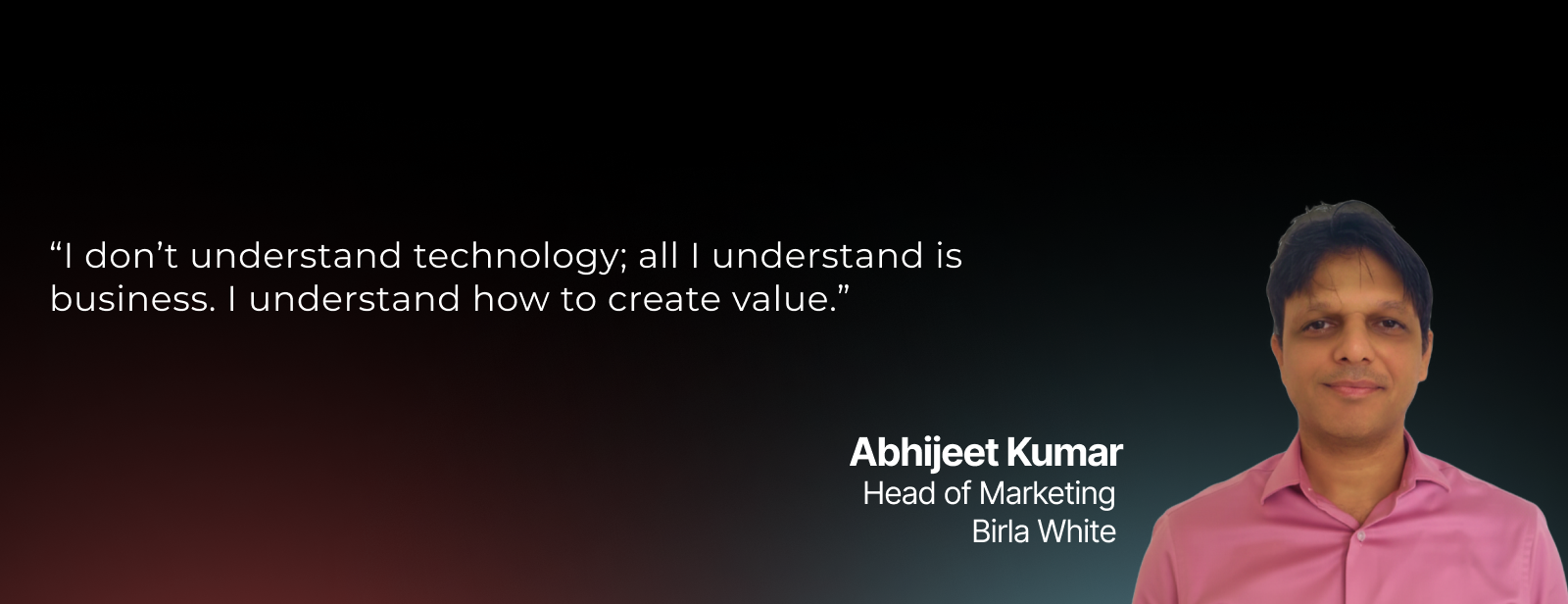
That line captured the heart of the session. The conversation wasn’t about fancy AI tools or buzzwords. It was about what really makes a traditional enterprise say yes to tech and how founders like you can align with that mindset.
In this blog, you’ll find the story behind Birla White’s transformation, the lessons that shaped it, and what it really takes to win over enterprise buyers today.
Most people assume innovation only happens in fast-moving sectors like consumer tech, fintech & SaaS. But when you look closer, some of the most inventive ideas are born in industries that rarely make headlines.
The building and construction (B&C) space is one of them. It’s a traditional sector where relationships matter more than dashboards, and most business still happens through distributors and field partners.
Technology adoption, as Abhijeet shared, often trails behind by 5-7 years compared to FMCG or electronics. Yet, that hasn’t stopped Birla White from staying ahead.
Abhijeet explained it simply:
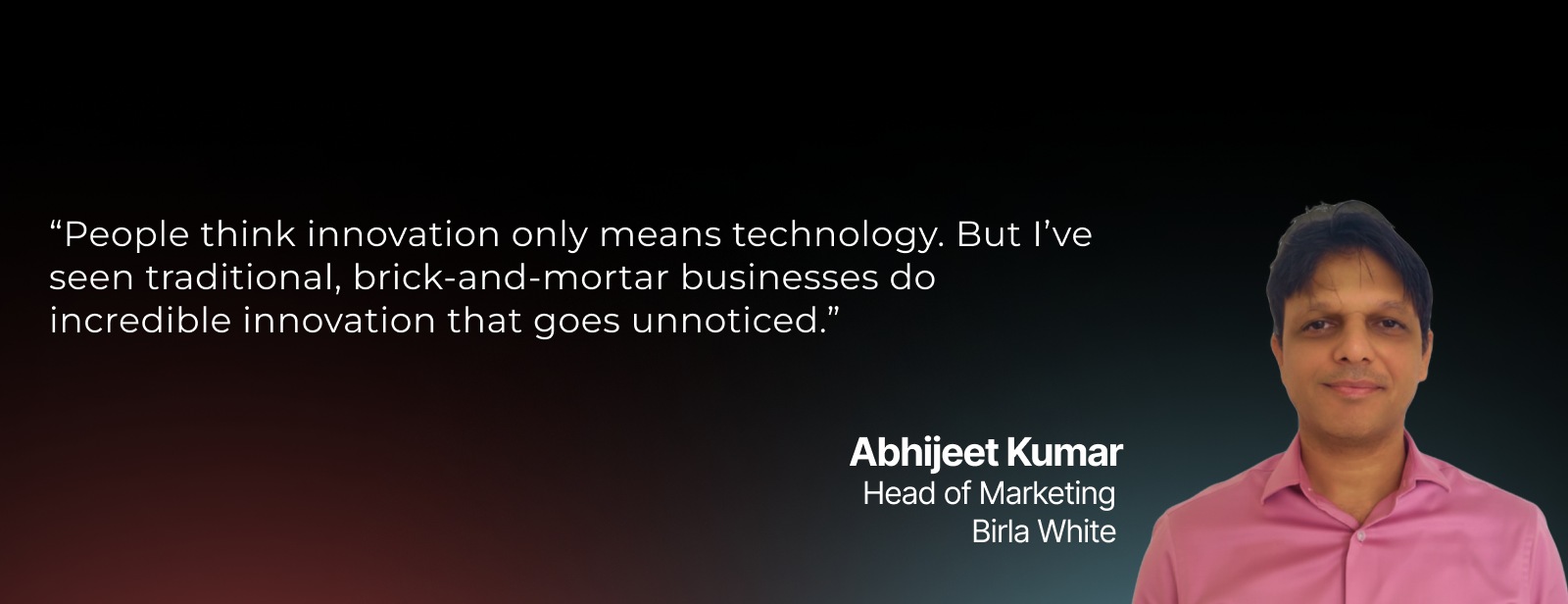
Example: In 1988, when India only knew grey cement, Birla White introduced white cement, a category no one had imagined. It wasn’t a tech breakthrough, but it changed how people thought about finishes and aesthetics.
Decades later, that same mindset drives how they approach technology today.
This shift from being product innovators to tech adopters didn’t happen overnight. It began with one question Abhijeet and his team kept asking: “Where can technology actually make life easier for our customers?”
That question became the foundation for Birla White’s digital journey, one built solely on purpose.
In fast-moving industries, tech adoption is easy to spot. But in traditional sectors like building and construction, progress takes time and intent.
As Abhijeet previously stated, there is a 5-7 year lag in tech adoption, and it isn’t about hesitation; instead, it has more to do with scale and coordination.
With thousands of distributors, warehouses, and contractors involved, every system must align before new technology can take root.
For Birla White, that shift began with one change that impacted everyone across its network.
In 2019, Birla White realized that its painter and contractor loyalty program was entirely paper-based and was painfully slow.
Here’s how it worked before tech entered the picture:
Abhijeet wasn’t having it.

They built an app with a quick registration process, instant verification, and digital onboarding. Painters could even cash out loyalty points directly to their bank accounts with a single tap.
The impact:
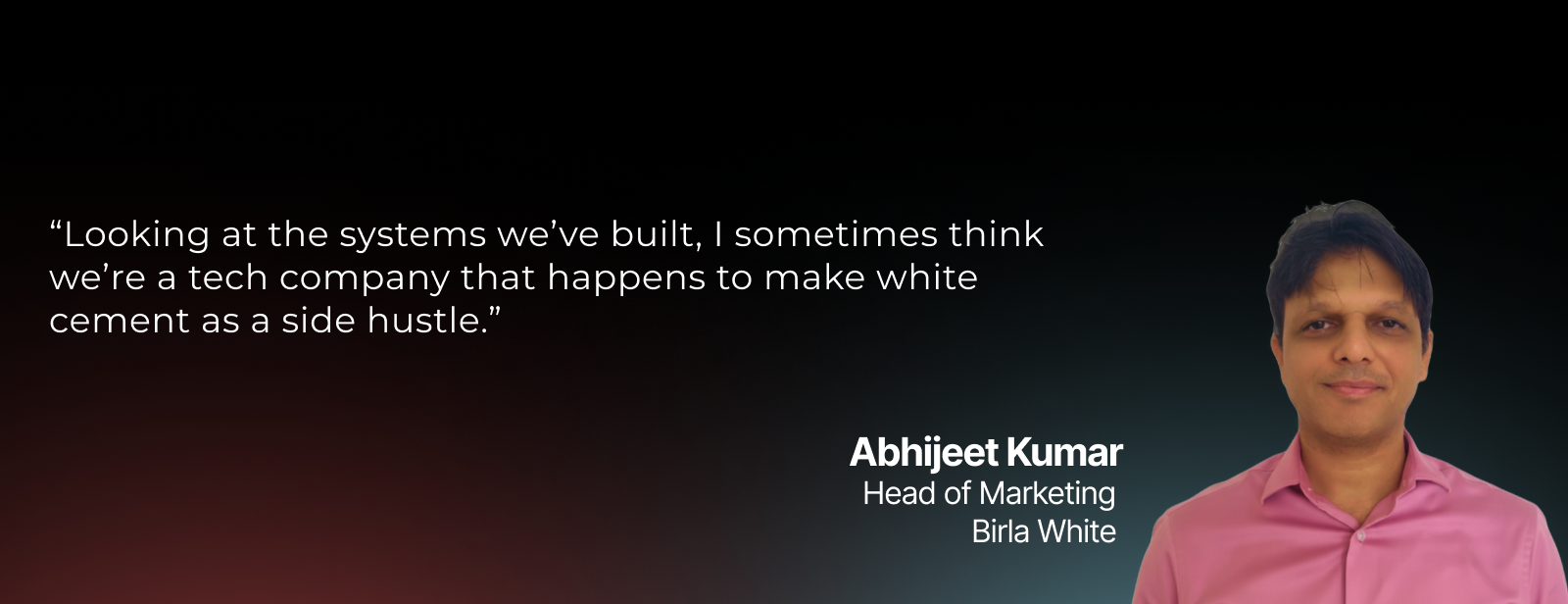
Laughing, Abhijeet said,
When traditional enterprises adopt technology, they start with what matters most, removing friction for their customers and partners.
When you pitch to an enterprise, remember:
Sometimes, change isn’t about doing something new. It’s about fixing what’s been hard for too long and doing it with intent.
When you think of a 37-year-old manufacturing company, you probably imagine factories, supply chains, endless Excel sheets and not custom-built apps and AI-driven systems.
But Birla White’s tech backbone tells a different story.
The company’s systems are built to be very practical. Their tech stack combines:
Each system was designed to do one thing well, to make someone’s job easier, whether that’s a contractor, a retailer, or a customer service rep. Here are a few instances:
In many legacy companies, customer complaints take days, sometimes weeks, to reach the right person. Birla White turned that into a same-day process.
Abhijeet shared,
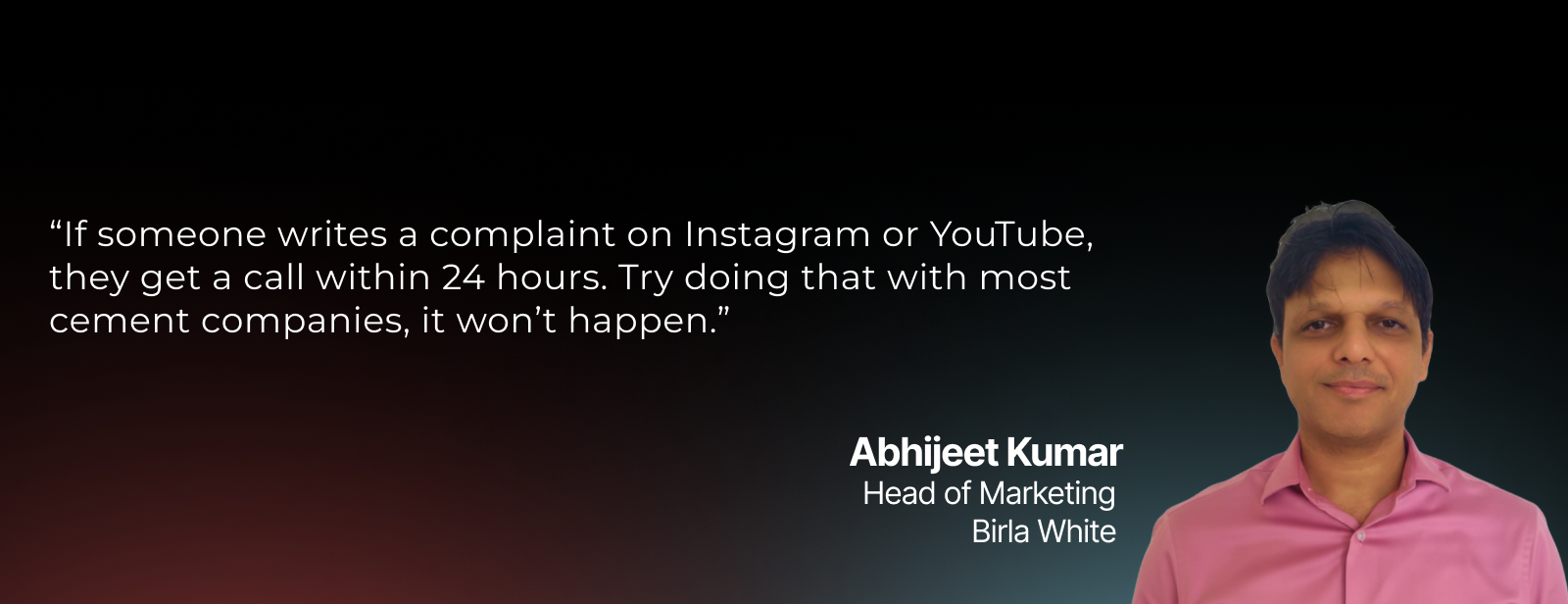
It came from connecting their CRM with their call center and social media systems, ensuring no message gets missed.
Instead of running after every new tool, the team uses AI where it can make a measurable difference.
Abhijeet explained that they first look at the business problem and then see if an AI tool can help solve it.
A few examples of this mindset in action:
These aren’t large-scale experiments, they’re small & smart decisions that compound into real impact.
Birla White doesn’t try to digitize everything at once. Some functions, like marketing and loyalty, are far ahead. Others, such as supply chain forecasting, are still being built.
As Abhijeet put it,
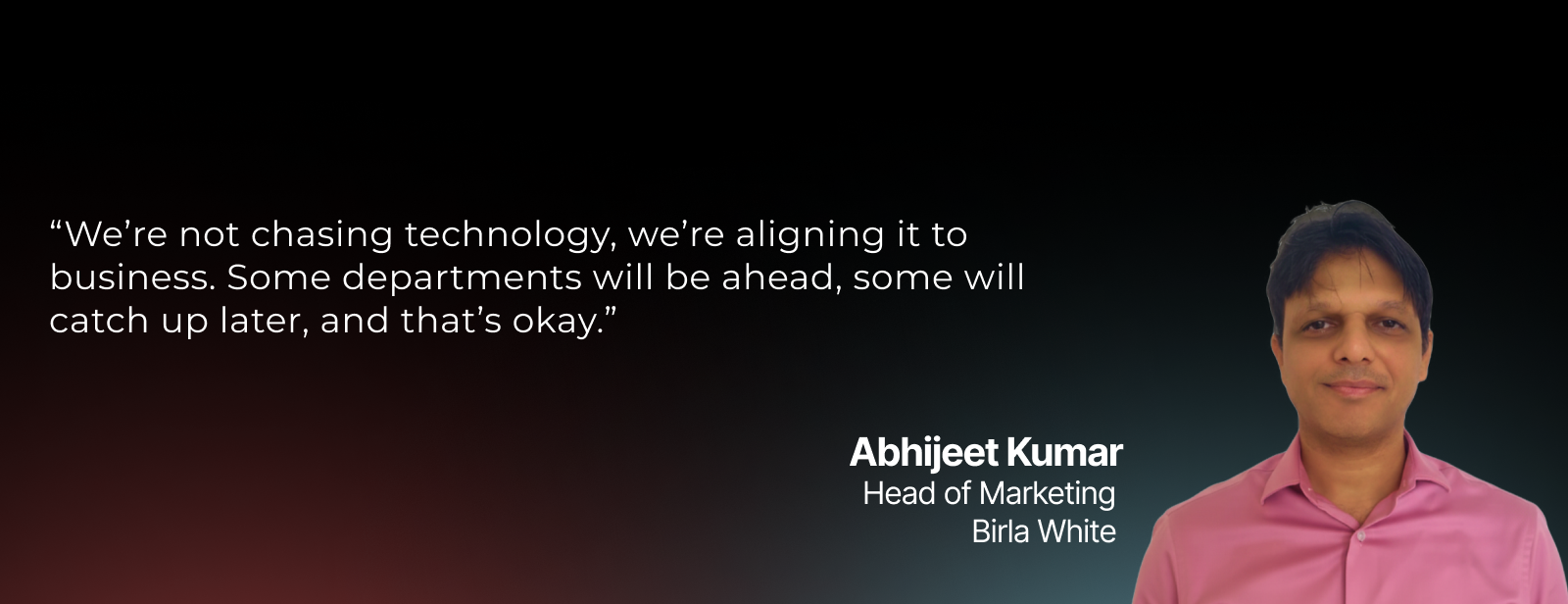
That mindset of building patiently and with purpose is what gives their systems longevity and helps them stay relevant without breaking what already works.
Every company talks about going digital, but few think about why.
At Birla White, that “why” has always been clearly aimed to make things easier for the people who work with them, from dealers to painters to customers.
That question continues to shape how Birla White is planning its next decade of growth.
Birla White’s digital thinking starts on the ground, with people and not platforms.
Before launching any system, the question is always, “Will this make daily work easier for the person using it?” This focus keeps technology practical, not performative, ensuring each tool has a visible impact on someone’s routine.
Instead of adding more software, Birla White is simplifying its digital stack.
The goal is to create a connected ecosystem where data, teams, and customers aren’t locked in silos.
When Abhijeet says they’re “building a system where data talks to data,” it means fewer barriers, faster actions, and a single source of truth for everyone involved.
The next wave of change is about responsiveness.
Birla White is integrating data from loyalty, marketing, and service to spot issues before they escalate.
If a dealer’s order drops or a customer complaint appears online, the system alerts the right person instantly by turning digital visibility into proactive service.
The upcoming phase of Birla White’s loyalty platform moves beyond transactions. It will recognize behaviors that strengthen the network by training participation, product advocacy, or helping peers onboard. The idea is to reward contribution, not just consumption, making loyalty more meaningful for everyone involved.
By FY2030, Birla White aims to be a fully connected, digital-first organization. But Abhijeet is clear that it doesn’t mean removing people from the process, but the vision is to use technology to strengthen relationships, shorten response times, and create smoother experiences across every touchpoint.
Birla White’s digital roadmap isn’t designed for headlines. It’s built for endurance with systems that can last, adapt, and grow with time. Each new layer adds clarity, not complexity, showing how transformation can be calm, intentional, and deeply human.
Traditional enterprises don’t start conversations with tools or features; they start with business challenges.
Abhijeet emphasized this clearly during the session:
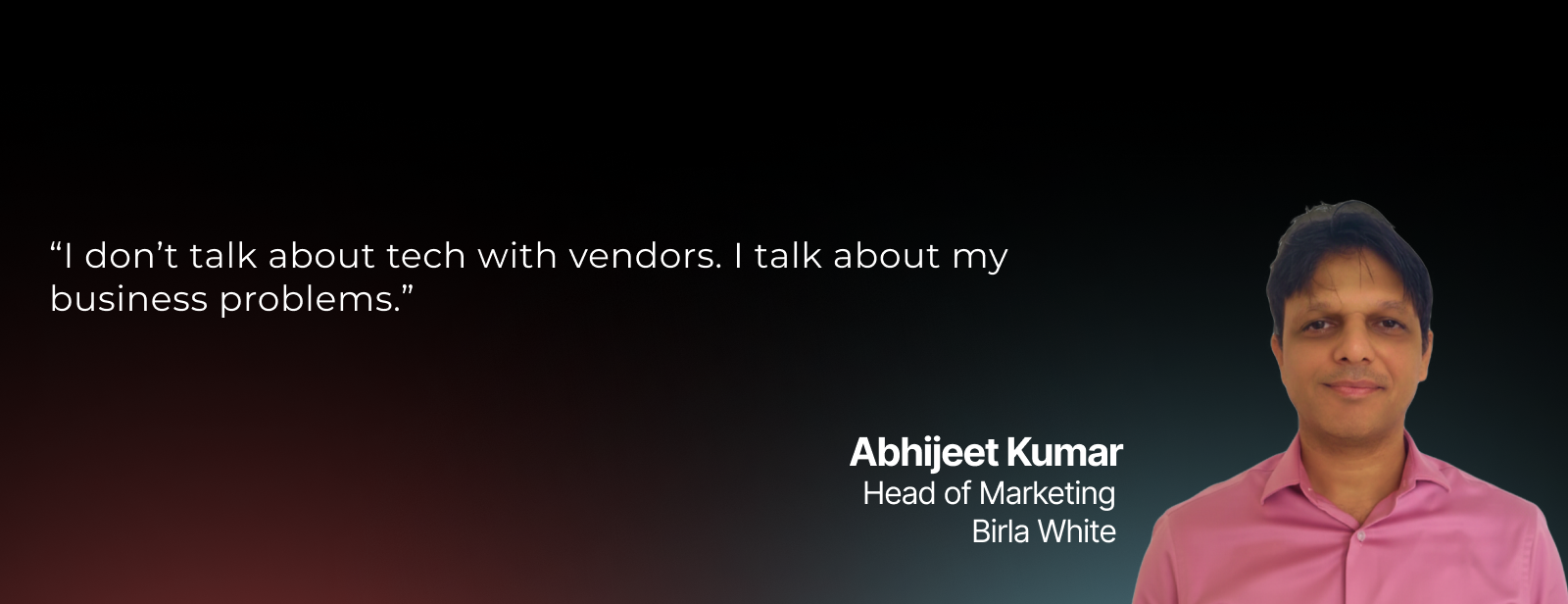
Before pitching, take time to understand how the company operates, where its inefficiencies lie, and how your solution fits into that specific workflow. When your pitch mirrors their priorities, not your product deck, you get attention that lasts beyond the demo.
Legacy businesses work within complex systems like distributors, factory timelines, and compliance layers. Founders who succeed don’t try to overhaul everything; they design tools that blend in. Instead of asking them to change, show how your product fits what already exists.
The less disruption you cause to daily operations, the faster adoption happens.
Big enterprise deals rarely happen in one go. So start small and solve one visible pain point that affects multiple people across the chain. When your pilot delivers measurable time savings or cost reduction, you earn the internal champions who make scale possible.
Abhijeet’s team, for instance, digitized a single process (contractor onboarding) and it became the foundation for everything that followed.
In traditional setups, even the smallest friction, like an extra login, a confusing interface, or a slow workflow, can stall adoption. Your product should work in minutes, not after training sessions. If you make their job easier from day one, users turn into advocates inside the organization. That’s how tech adoption spreads in environments where change usually moves slowly.
Most enterprise buyers aren’t impressed by buzzwords; they care about clarity on how this tool improves efficiency, revenue, or customer satisfaction for them. When your conversations revolve around outcomes and not technology, you come across as a problem-solver and not a vendor.
That shift in tone often determines whether your product gets adopted or ignored.
Traditional organizations take time to align internal approvals, budgets, and teams. But once trust builds and your solution proves its value, decisions move fast.
Birla White’s digital evolution is a reminder that patience pays off when your tech consistently solves real problems. It’s not about how quickly you sell, it’s all about how deeply you integrate.
Abhijeet explained that decisions usually begin with business impact, not trends.
If a new tool directly improves efficiency, reduces cost, or solves a recurring problem, it gets attention.
As he said, “The question we ask is never ‘What’s new in the market?’ It’s always ‘What problem are we solving?’”
Most traditional companies already have deep-rooted systems like CRMs, ERP tools, and dealer networks that must stay functional.
Adding new software means syncing with old ones, retraining teams, and ensuring zero downtime. So it’s not about being resistant to change; it’s the need to protect what already works.
Abhijeet’s advice was straightforward, which is to start with empathy.
Understand their structure, learn how decisions are made, and focus on solving a business pain instead of selling a feature.
As he put it, “If you can help me solve a business problem, I’ll find the budget.”
AI isn’t seen as a standalone project. It’s used where it can simplify something, like automating responses, improving customer experience, or predicting buying behavior.
Birla White applies AI quietly, in small, practical ways that make daily operations smoother.
Abhijeet said it’s not about replacing people with tech, it’s about giving them better tools. From retailers to painters, every system is designed to reduce manual work and free up time for real interactions.
“Tech should make relationships stronger, not distant,” he added.
6. What’s next for Birla White on its digital journey?
By FY2030, Birla White aims to become a fully connected digital organization, one where marketing, sales, loyalty, and service systems work as a single unit.But the journey won’t be rushed. Each layer is built to solve something real before moving to the next.As Abhijeet summed it up, “Becoming digital is not a project, it’s a way of working.”

A Consumer Psychologist, passionate about understanding what drives people to choose, trust, and love brands.